STARTED WITH
a night shift at Hôtel Molitor Paris
Handozio
A hospitality operations product for keeping the thread when a guest item moves from one team to another.
Open live site handozio.com
The product site is live; Handozio is currently in a commercial development phase.
An idea born between two teams
After several seasons working night reception at Hôtel Molitor Paris, some of the difficult situations were not dramatic. A bag left in storage, a car handed to valet, an incident to pass on: the weak point often appeared later, when another team had to pick up the thread.
I was not looking to add one more piece of software. I wanted to make what was already happening visible, especially when the person who took the request was no longer there.
The problem was not the bag
The problem was continuity of responsibility. Who took care of the item? What condition was it in? What has already happened? What does the next team need to know? These questions exist in many service gestures, but they become expensive when they stay scattered across a notebook, a message or a colleague’s memory.
Handozio came from a simple question: how can a one-off handover become a useful trace without imposing a process heavier than the operation itself?
What was actually built
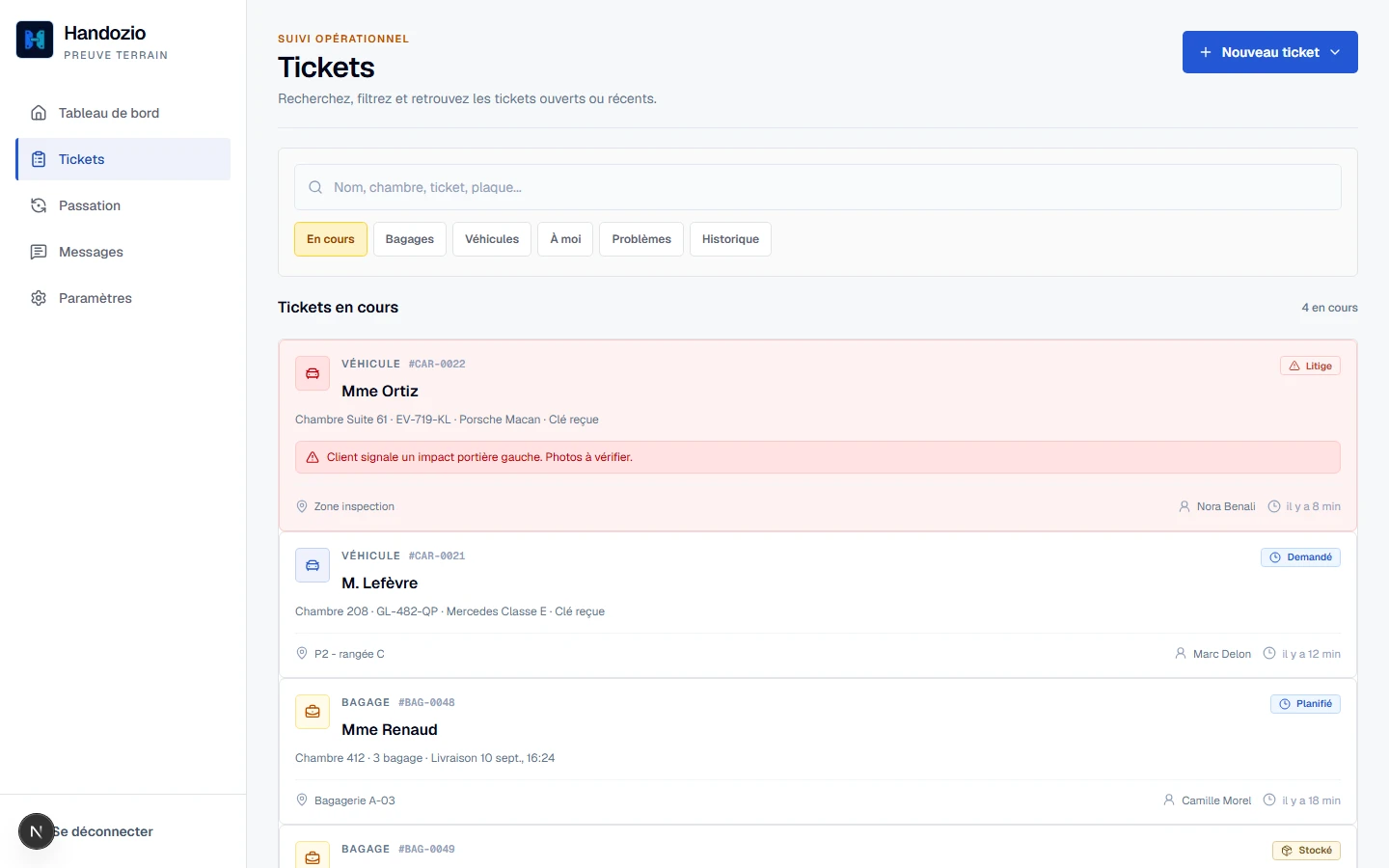
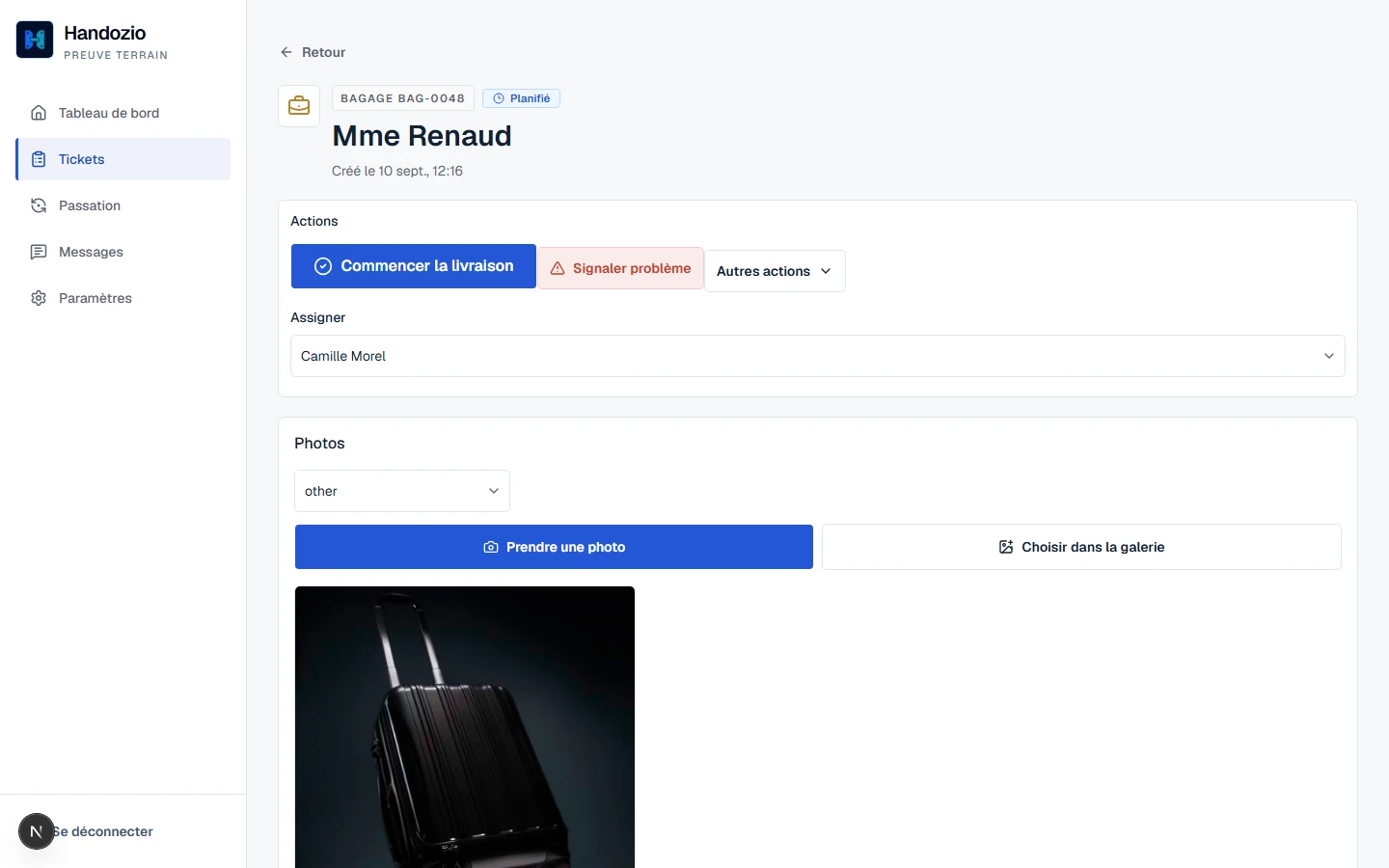
The core of the product is an operational ticket. A bag, vehicle or incident can be created, assigned, documented and found again in a timeline. Photos and observations keep proof beside ownership instead of separating the two.
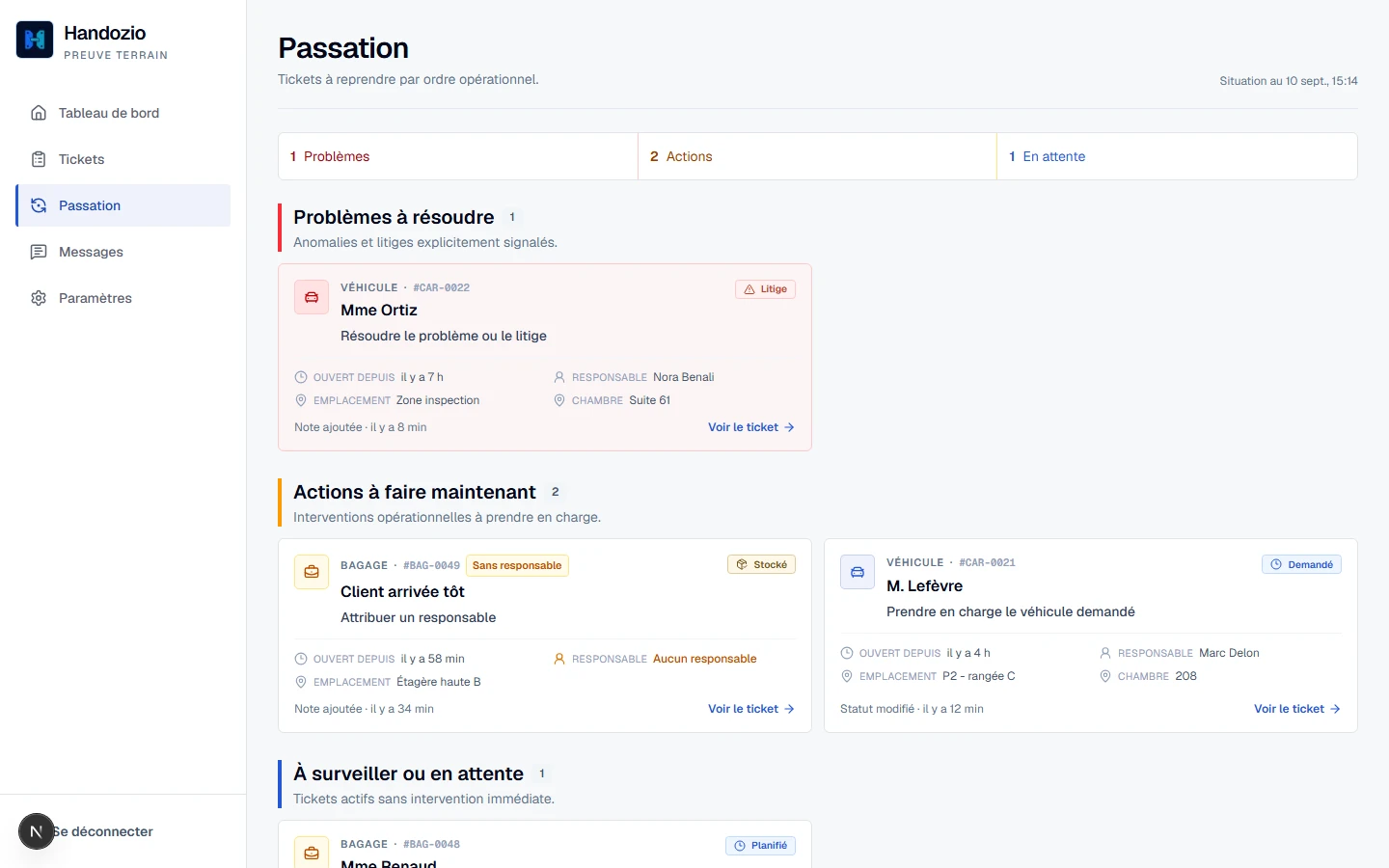
The product then adds what a real shift needs: team access, internal notes, messages, handover between shifts and usable vehicle sheets. They are extensions of one thread, not a collection of unrelated features.
Handozio is not trying to replace a PMS. It handles a narrower layer: what happens between a guest item being handed over and being returned, when several people need to act without sharing the same moment of work.
An idea that came from elsewhere
The QR decision is a good example of how the product evolved. While thinking about Logejri, I realized Handozio did not necessarily need a dedicated mobile app for some workflows. A QR entry point could open the web product at the right place, with less adoption friction and less surface area to maintain.
The connection between the two projects matters as much as the decision itself: a question from a discovery project improved a hospitality operations tool.
Margin notes
Margin notes
Some decisions look different once you remember where they came from.
DECISIONS
The product took shape around continuity
Four choices turned a service friction into a legible system.
Start with the ticket, not the dashboard
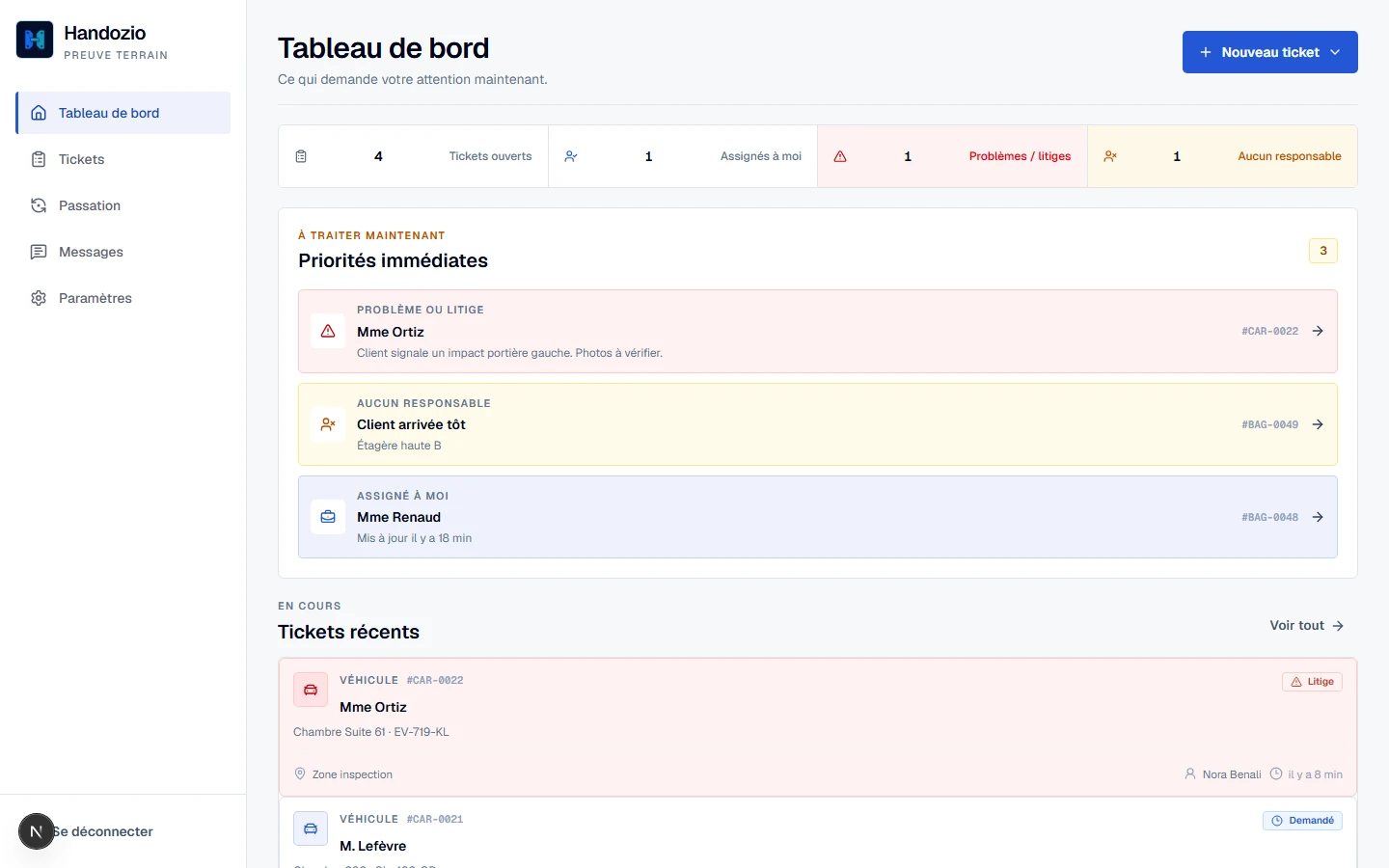
The smallest useful unit is an identifiable operation: a bag, a vehicle or an incident, with a status, an owner and a history. The dashboard comes afterwards, to read the traces rather than replace them.
Make handover a product output
A handover is not a note added at the end. It should pass on the latest state, observations and next action to the team taking over the shift.
Prefer QR access to a separate mobile app
The idea surfaced while thinking about Logejri: a QR entry point can bring the web product directly into the operation, without adding a mobile installation to an already busy workflow.
Keep proof proportionate
Photos, observations, ownership and a timeline answer the concrete questions of a service. Proof helps the team pick up the thread; it does not turn the tool into a legal system or a surveillance device.
CURRENT STATE
Handozio — Now
Handozio is live and currently in a commercial development phase. The public site explains the product and its use cases; this case study stays focused on design decisions, without inventing customer metrics or commercial results.
ARTIFACTS
The operational thread, from list to handover
The current screens show how Handozio keeps an operation legible as it changes hands.